Beyond the Boardroom: The ROI of a Baylor MBA in Nontraditional Career Paths
When people think about an MBA, the image that often comes to mind is the boardroom – executives in suits making high-level corporate decisions. But for Baylor MBA graduates Zeke Morgan, MBA/MSW ’18, and Connor Griffin, MBA/MDiv ’22, the return on investment looks different. Their careers show how a Baylor MBA prepares leaders to create impact in settings that don’t always fit the traditional corporate mold.
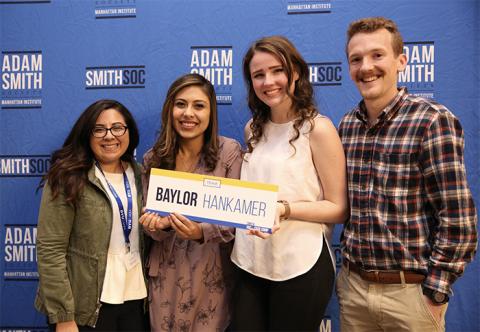
For Morgan, pursuing the MBA/MSW dual degree was about aligning his calling with his vocation. Drawn to the biblical idea of restoration, he was interested in how faith and economic development intersect.
“Isaiah 51:1-3 has been my north star verse for much of my professional career,” Morgan said. “It captures the duality of looking backward to understand who we are while also looking forward to what we will become.”
That vision has carried him through roles at Prosper Waco, Waco Family Medicine and now Watermark Health, where he works at the intersection of community health and financial stewardship.
Much of Morgan’s career has been about doing the most good for the most people, but his MBA challenged him to think deeper about what true return on investment looks like. In the nonprofit and healthcare space, ROI often means stretching resources as far as possible, stewarding every dollar for maximum impact. Morgan quickly saw that value can’t always be measured by scale. Reflecting on the parable of the lost sheep in Luke 15, he noted how the shepherd risks 99 sheep to seek out one.
“In business terms, it looks like a poor return,” Morgan said. “But what it really shows is value – sometimes the one percent is worth everything.”
That insight has shaped how he blends business principles with compassion in healthcare and community initiatives.
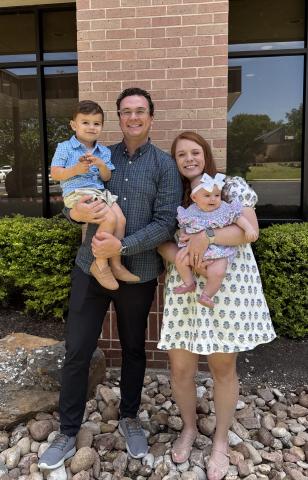
Griffin’s path also reflects this broader definition of ROI. Already serving as both a pastor and a business leader, he chose the MBA/MDiv dual degree program to clarify his calling, sharpen his competencies and develop his character.
“Success for me is about faithfulness,” Griffin said. “Whether I’m in a finance meeting or teaching a Wednesday night class, success means serving others and helping them flourish.”
Rather than creating a divide between his ministry and business interests, Baylor showed Griffin how the two could complement one another. His professors and peers encouraged him to integrate his faith into his coursework, showing him that calling and business leadership don’t need to exist in separate worlds. The skills Griffin developed – leading teams with clarity and compassion, building strategy, and developing others – continue to shape his work at First Woodway, where he regularly draws on what he learned in the MBA program.
“Whether I’m planning a new ministry initiative or leading staff, I find myself drawing on the same strategic and leadership principles,” he said. “The MBA didn’t just prepare me for business; it prepared me to lead people in any context.”
Both Morgan and Griffin’s stories reflect how a Baylor MBA equips students for more than traditional corporate paths. The program’s flexibility allows graduates to step into roles where business acumen is paired with service, stewardship and innovation. Whether addressing public health challenges, leading in nonprofit organizations or guiding churches and ministries, Baylor MBA alumni are redefining the ROI of an MBA. It’s not just about profit margins or promotions – it’s about influence, faithfulness and impact in the lives of people and communities.
For students who may be questioning whether an MBA is the right fit for their nontraditional journey, Griffin encourages them to think differently about the opportunity.
“Do it. A Baylor MBA is for anyone who wants to lead with excellence and impact,” he said. “Your calling will be clarified, you will grow in your understanding of leading organizations and you will develop character that matches your responsibilities.”
For Morgan and Griffin, the ROI of their Baylor MBA can’t be measured only in numbers. It’s seen in restored communities, flourishing people and leadership rooted in both strategy and service – proof that an MBA can go far beyond the boardroom.
What’s Next?
Explore how Baylor MBA students gain a competitive edge through personalized Career Services support, from interview prep to employer connections.
Interested in blending business with another calling? Learn how Baylor’s dual degree programs give students the opportunity to pair their MBA with disciplines like law, divinity, social work and more.
Ready to pursue a path that goes beyond the boardroom? Fill out this form to learn more about our Full-Time MBA and dual degree programs.