A Steady Hand and a Servant’s Heart
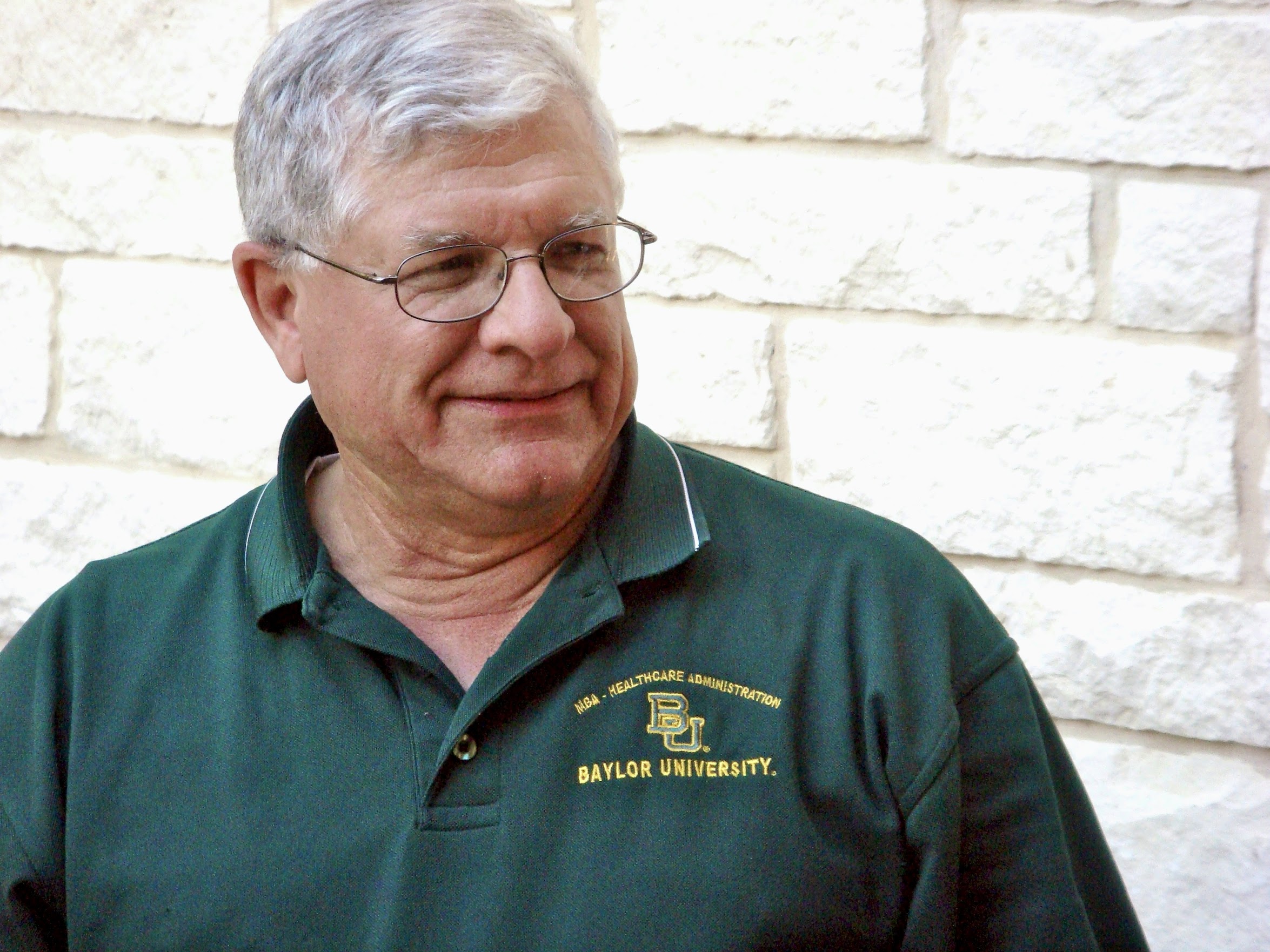
When the résumé of a soon-to-retire Air Force hospital administrator floated across Dean Terry Maness’s desk in the early 2000s, he had no way of knowing he was holding the future of Baylor University’s healthcare administration education. At that point, Baylor’s Hankamer School of Business had only a single healthcare-related course on the books. Faculty interest existed, but Baylor lacked a true insider – someone who had lived and led within the healthcare system, someone who could build a program rooted in both academic rigor and real-world operations.
That insider arrived in the form of Scott Garner.
“He had significant leadership and experience in the healthcare industry,” Maness said. “He understood economics, he had the business background, and he had the Baylor connection. It was just the right person at the right time.”
What began as an unexpected teaching role – introductory economics, which Maness still finds amusing – quickly evolved into something far more transformative. Baylor had been wrestling with a single question for years: Should the Business School be involved in healthcare? Garner’s arrival provided both the answer and the roadmap.
Building a Program That Didn’t Yet Exist
Once on campus, Garner immediately began building relationships, beginning with Economics Professor Jim Henderson, whose textbook on healthcare economics had opened the door for Baylor’s early explorations in the field. Together, Henderson and Garner shaped what would become the MBA in Healthcare Administration, ensuring from the beginning that it would be graduate-level, practice-oriented and aligned with national expectations.
“We really needed to have a master’s program, not an undergraduate program,” Maness said. “We wanted our graduates to start not at an introductory level, but at middle management. The master’s program was essential for that.”
Garner’s most indelible mark was the residency requirement. Drawing on decades of operational experience, he knew that classroom instruction alone could never produce the kind of leaders healthcare organizations needed.
“He was instrumental in developing our residency program,” Maness said. “It gave our graduates an upper leg. Many of them were offered jobs before they even graduated.”
In many ways, the residency became the program’s signature feature – something that distinguished Baylor students nationwide. CEOs noticed. Hospitals noticed. And so did alumni like Joel Allison, then president and CEO of Baylor Health Care System.
“I thought it would be a wonderful opportunity for Baylor,” Allison said. “The financial focus, the economics, the leadership components – Scott was putting together something that really mattered in this field.”
Allison joined the program’s advisory council at Garner’s invitation, becoming one of its earliest champions. He also committed his organization as a residency site, often serving as a preceptor himself.
“Students needed that hands-on experience,” Allison said. “Scott understood that from day one.”
The Architect of a Vision
Those early years required Garner to bridge two worlds: the structured, directive environment of the military and the more deliberative rhythm of academic life. Maness remembers the transition with fondness.
“Scott had to adjust to the academic way of doing things,” he said, “but he also had to keep that industry mentality. We needed high-performing students who could start with real leadership ability from day one. And I think he modeled that for them.”
His leadership – steady, relational and deeply mission-focused – shaped not only the MBA program but also the Robbins Institute for Health Policy and Leadership. Garner cultivated key industry relationships, donor partnerships and professional networks that strengthened the Institute’s national standing.
One of the most meaningful relationships he built was with the Robbins family, whose generosity and guidance helped elevate the Institute to new heights.
“Scott really solidified that relationship,” Maness said. “He almost had daily contact with them. He genuinely loved them, and they loved him.”
A Legacy Measured in People
Even after retiring from Baylor Scott & White Health, Allison watched Garner’s influence from a different vantage point.
“When I moved to Waco, he invited me to become more involved with the program,” Allison said.
Garner welcomed him onto the advisory council, encouraged him to mentor students and even asked him to teach a leadership course. Allison agreed, on one condition.
“I didn’t want to be paid,” he said. “I told him I’d do it voluntarily.”
Teaching turned out to be a gift.
“Being around students kept me engaged,” Allison said. “It was a blessing – kind of a godsend – as I transitioned into retirement. And I credit Scott for offering me that opportunity.”
The two bonded over shared Baylor roots, military service and a love for storytelling.
“Scott’s a great storyteller,” Allison said. “The students love it. It adds value when they can hear real experiences from both of us – military healthcare and civilian healthcare.”
It is fitting, then, that Garner’s legacy is most deeply felt not in buildings or programs – but in people.
A Retirement Built on Faith, Friendship and Purpose
As Garner steps into retirement, those who worked most closely with him see this next chapter as well-earned.
“Enjoy it,” Allison said. “More time for family, for Baylor athletics, for travel – just enjoy it.”
But he also knows Garner won’t be idle.
“Scott’s got enough energy that he’ll stay busy and active,” he said. “And I know Dr. Forest Kim is still keeping him involved when students need advice, especially about residencies.”
Maness, reflecting on the full arc of Garner’s career at Baylor, sees providence woven throughout.
“We had been talking for years about whether the Business School should be involved in healthcare,” he said. “We just didn’t have the right person. And then Scott’s résumé showed up, right when we had a position open, right when we needed someone with his experience. You look back, and you see God’s hand in it.”
A Lasting Mark
Today, Baylor’s MBA program and the Robbins Institute stand as nationally respected models of healthcare leadership education – programs known for preparing graduates who combine competence, compassion and character.
That reputation exists in large part because Scott Garner believed Baylor could make a difference in the healthcare industry, and then spent more than two decades building the structures, relationships and opportunities needed to make that belief a reality.