Baylor Healthcare MBA Student Continues Winning Streak with National Essay Competition Victory
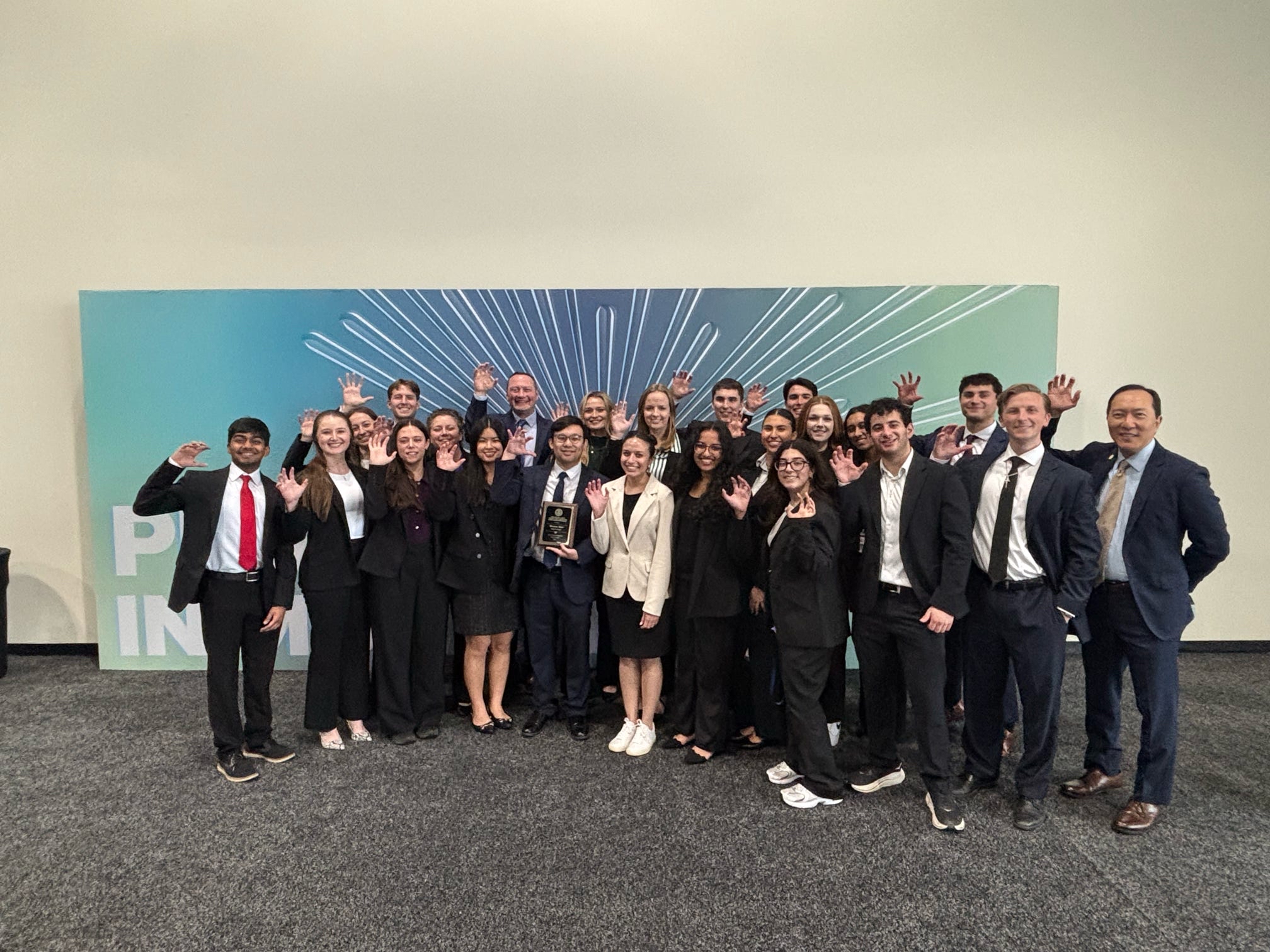
Michael Tran, a current student in the Robbins Healthcare MBA program at Baylor University, recently earned first place in the American College of Healthcare Executives (ACHE) Richard J. Stull Student Essay Competition in Healthcare Management. His essay introduces an innovative framework for integrating artificial intelligence into chronic disease management, offering a new approach to improving care delivery and patient outcomes.
Tran’s essay presents the CARE Model, a framework designed to guide healthcare leaders in implementing artificial intelligence in a more coordinated and patient-centered way for chronically ill patients. Built around four pillars – coordination, analysis, redesign and empowerment – the model addresses the inefficiencies and fragmentation that continue to challenge chronic disease management across the healthcare system.
“Chronic disease continues to place significant strain on the healthcare system, largely driven by fragmented care delivery and inefficiencies,” Tran said. “The CARE Model is designed to help move artificial intelligence beyond isolated applications and serves as a foundation for systemwide transformation.”
His work focuses not only on the technical capabilities of artificial intelligence, but also on the strategic role it can play in reshaping how care is delivered. By emphasizing both operational improvements and organizational leadership, the model provides a practical roadmap for healthcare systems seeking to improve outcomes while reducing inefficiencies.
Tran’s interest in this topic was shaped by both academic experiences and personal perspective. Through coursework in the Baylor MBA program, he developed a deeper understanding of the cost pressures, complexity and fragmentation within the U.S. healthcare system. At the same time, watching his father navigate chronic care highlighted the real-world impact these challenges have on patients and families.
“That combination pushed me to think about how healthcare leaders can redesign care delivery in a more integrated and sustainable way,” Tran said.
Throughout the process, Tran credits Baylor’s program for helping him approach the topic from both a strategic and operational lens. Courses such as Healthcare Administration and Healthcare Finance provided insight into the financial and structural challenges healthcare organizations face, while classroom discussions and exposure to industry leaders helped him connect theory to real-world application.
“The program really challenges you to think about healthcare as a system, not just a collection of individual functions,” he said. “It helped me frame this not just as a technology initiative, but as a broader strategic opportunity to transform how care is delivered.”
Faculty mentorship also played a key role in shaping his work. Tran pointed to the guidance and support of program faculty, whose feedback helped refine both the direction and depth of his essay.
“Dr. [Forest] Kim played a major role as a mentor throughout this process,” Tran said. “His lectures, guidance, feedback and support were instrumental in shaping both the direction and quality of my work. I would also like to thank Dr. [Dan] Wood and Professor [Cherise] Bridgewater, whose lectures, experiences and real-world insights helped deepen my understanding of healthcare leadership and influenced how I approached the essay.”
In addition to faculty support, Tran emphasized the impact of his cohort and the collaborative environment within the program.
“My classmates have been a huge part of my growth,” he said. “They constantly challenge me to improve, and their feedback helped me think through how to better communicate my ideas. That environment made a big difference in developing this work.”
Tran received his award at the ACHE Congress on Healthcare Leadership, where he also had the opportunity to present his work and engage with healthcare leaders from across the country. The experience, he said, was both professionally and personally meaningful.
“Winning this competition means a lot, not just because of the recognition, but because of what it represents,” Tran said. “Coming into the program without a business background, I sometimes felt like an imposter. This experience gave me confidence and reinforced that I’m on the right path in healthcare administration.”
This accomplishment marks the third consecutive year a Robbins Healthcare MBA student has won the competition, reinforcing the strength of the program and its students on a national stage.
"We are humbled and honored by this distinction given the high quality of students and programs in ACHE’s Higher Education Network," said Forest Kim, PhD, executive director of the Robbins Institute for Health Policy and Leadership and previous co-director of the Robbins Healthcare MBA program. "The award speaks not only to the academic aptitude of our students but their strong work ethic and commitment to seeing advancements to our healthcare system.”
The experience also strengthened Tran’s perspective on leadership and the role it plays in shaping the future of healthcare.
“One of my biggest takeaways is that effective leadership goes beyond strategy,” he said. “It’s about supporting teams, showing compassion and leading with purpose.”
Looking ahead, Tran hopes to continue building on this work and pursue a leadership role within a hospital setting, where he can help improve care delivery and patient outcomes at scale.
His success reflects not only individual achievement, but also the continued momentum of the Robbins Healthcare MBA program, which has now produced three consecutive winners of the national competition.
“This accomplishment speaks to the kind of environment Baylor creates,” Tran said. “It’s a program that challenges you, supports you and equips you with the tools to make a real impact in healthcare.”
To learn more about how the Robbins Healthcare MBA program prepares students to lead in a complex and evolving healthcare landscape, click here.