The Communication Skills Every MBA Leader Needs

What does it take to lead well? Strategy matters. Decisions matter. Clarity matters. But none of them go anywhere without communication.
Influence is built by how clearly ideas are expressed, how effectively they can be adapted to an audience and how powerfully they move people toward action. Even the most capable professionals can plateau if they can’t translate their expertise into communication that inspires alignment and momentum. As responsibilities grow, so does the need to lead in the midst of complexity. If you’re looking to grow into a leadership role, or step into a bigger one, strong MBA communication skills may be what carry you there. At Baylor, we see communication differently. It’s not a “soft skill.” It’s how you lead with purpose.
And in the Baylor Online MBA, you’ll learn to communicate in ways that are clear, confident and grounded in something deeper: integrity.
Why is communication a core leadership competency?
Some skills help you do your job. Communication helps you lead others.
At high levels of leadership, it is a necessary skill and element of daily strategy. Harvard Business Review notes that transformational leaders are exceptional communicators, who motivate others and create shared meaning through every communication touchpoint. That leverage can determine whether a team understands a new strategy, stakeholders support a major change or employees trust the direction of an organization.
For emerging executives, leadership communication development is about learning to communicate with purpose.
Core capabilities include:
- Clear, concise messaging
- Persuasive communication
- Emotional intelligence communication
- Strong public speaking and active listening
Together, these pillars of growth contribute to communication mastery for executives who must lead across teams, functions and levels of authority.
How does clarity improve leadership?
When things get complex, people look to leaders to make them simple.
Understanding how clarity improves decision-making is essential because it reduces confusion, helping teams understand what matters, why it matters and what needs to happen next.
Even the strongest strategies can lose force through overexplaining, mixed priorities, or unfocused messaging.
Why does persuasive communication matter in an MBA?
Leadership often requires gaining buy-in from people who have different priorities, pressures and perspectives. That is when persuasive communication MBA training matters most.
Persuasion is not manipulation. It’s connection. Data is necessary, but data alone rarely moves people. Effective persuasion combines evidence, credibility, purpose and timing. It helps leaders explain not only what needs to change, but why the change is worth making. With persuasive communication, others don’t just see the path forward; they also want to take it.
How does emotional intelligence shape communication?
Great communication starts before you speak.
Emotional intelligence communication helps leaders understand the needs, concerns and reactions of the people they lead. This includes knowing when to speak directly, when to ask questions, when to slow down and when tone matters as much as content. It also matters in difficult conversations, where leaders must balance honesty with respect.
Why is public speaking important for MBAs?
As leaders advance, they are often asked to communicate in higher-stakes settings: executive presentations, board meetings, client conversations, public forums and team-wide updates. That makes public speaking for MBAs an important part of professional development.
Public speaking isn’t just about delivery. It’s about credibility. Presence. Trust. Leaders need to communicate with confidence, but also with substance. Body language, tone, pacing and structure all influence whether an audience trusts the message.
Why is listening a leadership skill?
The best leaders don’t just speak well. They listen well.
Strong leaders do not only transmit information. They gather insight from information they take in. For executives, listening is not passive. It is a strategic discipline. It helps leaders ask better questions, uncover hidden concerns and make decisions based on a fuller understanding of the business environment. True communication mastery for executives includes knowing when to speak and when to listen.
How did Baylor’s Online MBA help one graduate find her leadership voice?
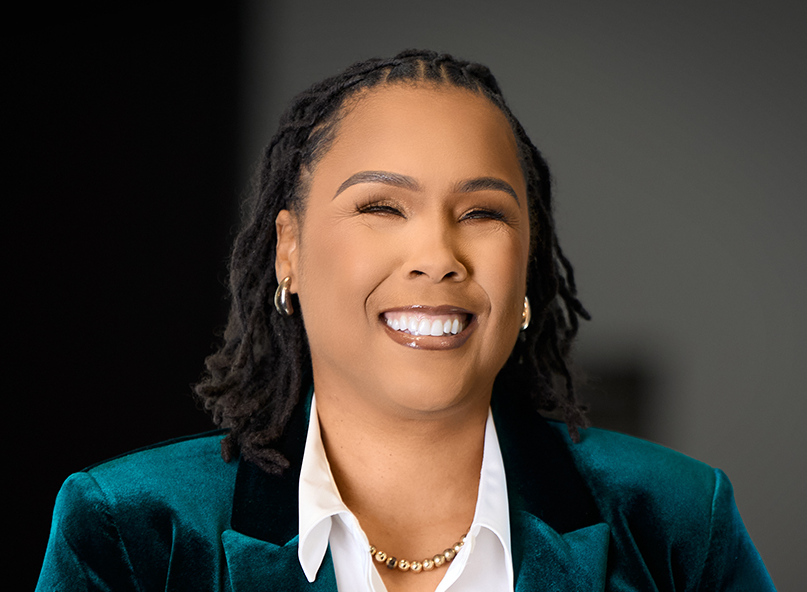
Tiffani Martin, MBA ’25, knows what’s at stake when communication falls short.
In the world she works in, where emerging technology, cybersecurity, accessibility and AI increasingly shape how people live and work, the cost of unclear communication is not just inefficiency. It can mean leaving people behind, especially those she built her company to serve. That’s why she sees communication as more than a skill.
It is the means by which she advocates, builds trust, translates complex systems and helps organizations see both the promise and the responsibility of technology.
Martin graduated from Baylor’s Online MBA program, drawn to its accessible pathway for continuing her education.
“I am 100-percent blind,” Martin said, “so the Baylor program created a way for me to stay engaged and get the education that I wanted with the fourth and fifth industrial revolutions that we're experiencing in AI and data.”
Today, Martin’s burgeoning company focuses on emerging technologies and systems, with an emphasis on making them more equitable through accessibility and cybersecurity.
“I believe all companies are going to end up being tech companies with specializations,” Martin said.
That belief shapes how Martin sees leadership communication in an AI-driven world. In a Baylor information systems course, she learned to better connect business strategy and technology, a skill she sees as essential as organizations rush to adopt AI. Too often, she said, companies treat AI as “a quick fix” instead of asking when, how and whether it should be used.
Her Baylor experience also changed the way she listens. In a negotiation course, Martin realized she had often been “listening to react” rather than listening to understand and respond. The course helped her see negotiation as more than a way to secure better deals. It was training in real-world ways to work with people who have different priorities, beliefs and values, and still move toward productive outcomes.
As Martin meets with civic and organizational leaders about accessibility, she has to communicate the urgency and value of inclusion to audiences who may be facing elections, budget cuts and competing priorities. She brings both professional expertise and lived experience to those conversations, a balance that mixes persuasion with high emotional intelligence. Martin noted empathy and compassion were “interwoven in all of the curriculum,” at Baylor, something she connects directly to the school’s Christian foundation. Even in courses where she did not initially expect that connection, such as supply chain management, Martin saw themes of stewardship, collaboration, righteousness and integrity brought into the work.
“Keeping people first,” she said, has become “the fulcrum of every conversation that I go into.” That prioritization came from the perspective offered in her degree.
For prospective students, Martin’s message is clear. Technical skills and business knowledge matter, of course, they do. But the ability to know who you are and what you believe in will be differentiating factors in this new world.
“I think what we need right now more than ever are professionals who stand on values, unwavering ethics and morals, as systems are becoming more automated,” Martin said.
For her, Baylor did more than help her build professional skills. It helped her understand how to carry her identity, purpose and voice into every room.
“That's what Baylor does,” Martin said. “They help you understand who you are, what your purpose is, how to effectively communicate that and get the job done.”
How can MBA communication skills accelerate your career?
An MBA is more than a credential. It’s a step toward something bigger.
Through the Executive Communication concentration and a curriculum grounded in leadership and ethical decision-making, students can learn to communicate with the clarity, confidence and purpose required for lasting impact. Because leadership isn’t just about having the right answers. It’s about helping others see them, believe them and act on them.
Learn more about Baylor’s Online MBA program
Learn more about the Baylor Online MBA concentration in Executive Communication