HSB AI Spotlight: Hope Koch

Faculty at the Hankamer School of Business are working to ensure Baylor Business students are prepared for the rapidly evolving landscape of artificial intelligence (AI) as it continues to reshape industries. Hope Koch, PhD, the 2023 Distinguished Professor and holder of the Godfrey Sullivan Endowed Chair, is helping lead that effort by equipping her students to overcome their fear of AI to assist businesses in incorporating it into their operations.
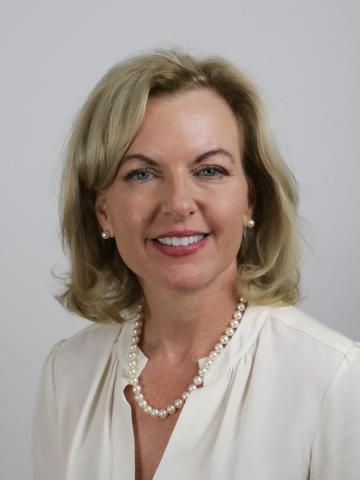
Koch’s involvement in AI extends beyond the classroom through her appointment to the Texas Artificial Intelligence Council. The council, established by the Texas legislature in 2026, advises state leadership on AI innovation while addressing risk and ethical considerations. The Texas lieutenant governor appointed Koch, who serves alongside other leaders, including fellow Baylor graduate Marcus Murph, BBA ’95, partner and head of technology consulting at KPMG.
Her work on the council has directly shaped her approach to teaching, pushing her beyond traditional assignments toward real-world application. In her courses, students develop resources and recommendations for the Texas AI Council as part of their major group project, an approach rooted in her belief that classrooms should be useful.
“To be a resource for the State of Texas and beyond, we’ve collected AI policies from every U.S. state and leading countries across the world,” Koch said. “We’re putting these into a large language model. We’ll rely on this model to help us develop recommendations that promote business innovation, improve education and address environmental sustainability.”
Koch’s MBA students are contributing to the council’s work through course projects, including those focused on important healthcare policy implications. Their voices and perspectives add great value to the AI Council, Koch said.
“I am honored to serve on the Texas AI Council and feel a divine sense of purpose that I am part of something important,” she said. “I promise to do a good job and hear everyone’s ideas about this fast-moving technology, which is why I have my students working on projects for the council. Students always have great ideas from a variety of perspectives.”
To prepare students, Koch introduces both the practical and conceptual sides of AI early on. This includes teaching them to build AI agents capable of completing tasks on their behalf. Students build multiple agents in just a few hours using Microsoft Copilot and Google Colab. These hands-on projects allow them to explore how technology functions in real-world settings while also developing a broader understanding of its role in business.
Alongside technical skills, Koch emphasizes critical thinking and ethical awareness, often incorporating structured debates that challenge students to evaluate multiple perspectives.
“We’ve debated about universal basic income, AI in healthcare and data centers,” Koch said.
As AI adoption accelerates, Koch encourages everyone to adopt a growth mindset and learn as much as possible about AI. Because the field is evolving so quickly, students entering the workforce have a unique opportunity to contribute in meaningful ways.
“This is the first time students are almost on the same footing as employers,” Koch said.
Looking ahead, Koch expects AI to reshape how we work, creating a greater need for adaptable professionals who can think across disciplines and orchestrate AI.
“While we all feel a bit out of kilter right now with all the change, we must look ahead with hope and view the human opportunity in a period of exponential change,” Koch said.