Learning to Ask Better Questions

Bella Brown finished her undergraduate degree at Baylor knowing she wanted a career in marketing and strategy. What she did not have yet was a picture of how an entire business fits together.
"I recognized that understanding one function of a business was very different from understanding how an entire business works," Bella said.
Rather than spend several years in the workforce waiting for that perspective to develop, she moved directly into Baylor's Full-Time MBA program.
"I was already in a learning mindset," she said. "I saw the early-career MBA as an opportunity to build that foundation from the beginning of my career."
She wanted to understand the financial reasoning behind decisions, how strategy becomes execution and how data can point toward opportunity instead of only describing the past.
A Start That Began Overseas
Bella's interest in a broader business education started with two international experiences during her undergraduate years, beginning with a semester in Maastricht, Netherlands.
"It was the first time I had ever traveled outside of the United States, and I remember realizing very quickly how much bigger the world was than what I had experienced up to that point," Bella said.
That semester also shaped how she thinks about business across cultures.
"Maastricht sparked my interest in understanding how people, cultures and business intersect," she said. "The way we approach a problem or make a decision in the United States is not necessarily the way someone halfway around the world would approach it."
The Baylor Business mission trip in Zambia gave that interest a purpose. Bella worked directly with Zambian students preparing to enter the job market, covering strategy, selling, relationship building and ethical decision making before supporting them through real interviews with local employers.
"I saw that concepts I had learned in a Baylor classroom could become tools that helped another person recognize opportunities for their own future," Bella said.
The week also showed her the gap between understanding something and explaining it.
"Knowing something and being able to communicate it effectively to someone with a completely different background are two very different skills," she said. "I had to listen first, adapt quickly, ask better questions and understand the environment in which those students would actually be applying what we discussed."
Those trips shaped what she wanted from graduate school.
"I did not want my international experiences to simply be memorable trips I had taken in college," Bella said. "I wanted them to influence the way I approached my career."
Finding the Intersections
Bella entered the program certain she loved marketing. The MBA made her think specifically about why.
"I am most energized when I can approach an ambiguous business problem, understand the people behind it, dig into the data and turn those insights into something that can actually be executed," she said.
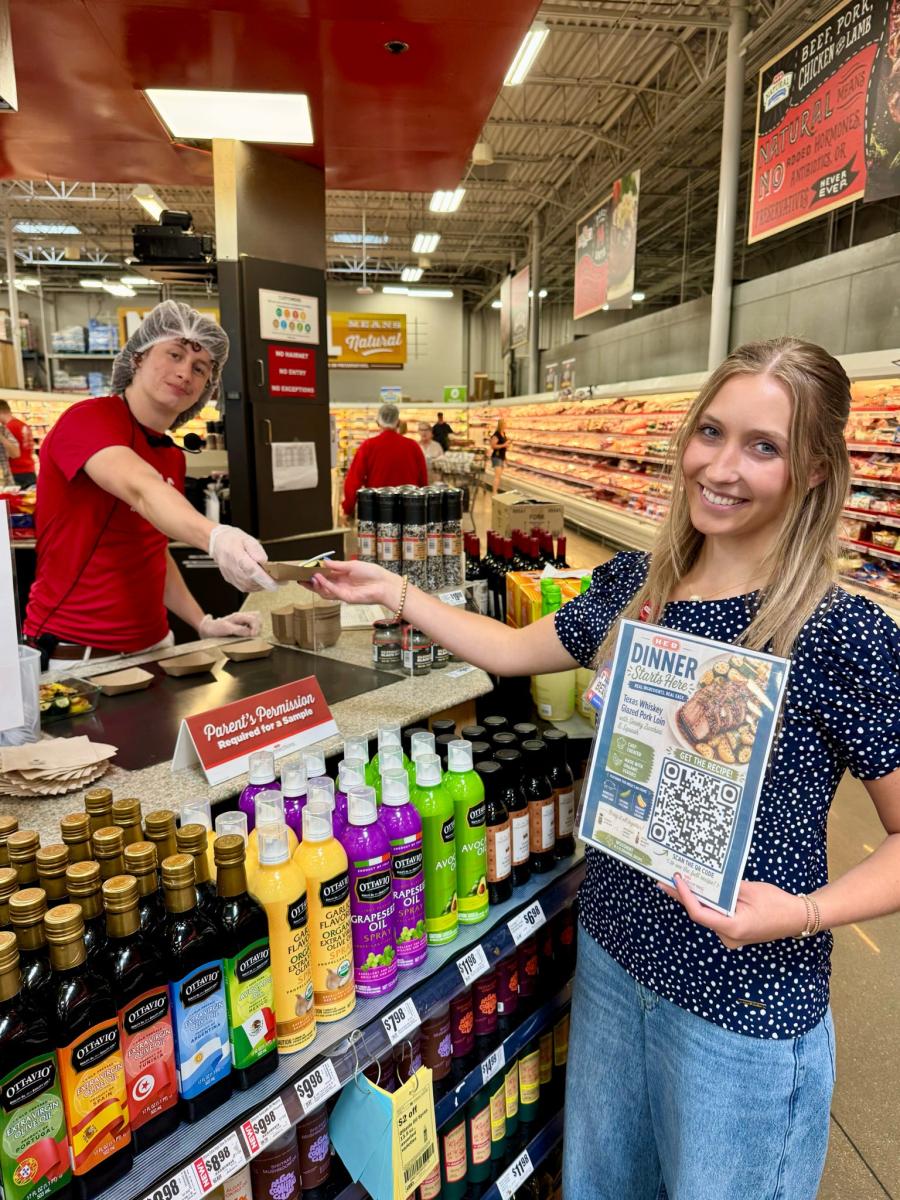
Her internship with H-E-B reinforced that. Some of her most useful hours were spent away from her desk.
"They were when I was in the produce department working alongside partners, walking competitors, talking with leaders, observing customers and then taking everything I had learned back to the business problem I was trying to solve," Bella said.
She took a broader lesson from this experience.
"Data can tell you where to look, but people often help you understand why something is happening," she said.
Baylor’s Career Center helped her address the challenge, particular to early career candidates.
"As an early-career professional, it can be easy to focus on the years of experience you do not have," Bella said. "Baylor has helped me recognize the value of the experiences I do have and articulate what I learned from them."
Working Without an Answer Key
Bella points to Baylor's MBA case competition team as the clearest example of what the program asked of her. Teams received a business case and had less than 24 hours to diagnose the problem, build the analysis and deliver a 20-minute presentation followed by 10 minutes of questions.
"There were nights when our team was still working at two or three in the morning because we were challenging assumptions, rebuilding recommendations or making sure the financial rationale actually supported what we were proposing," she said.
What she took from it was a lesson in collaboration.
"You learn very quickly that having the best individual idea does not matter if the team cannot build on it," Bella said. "I learned when to defend an idea, when to let one go, how to communicate under pressure and how to keep moving when there simply is not enough time to make everything perfect."
The Full-Time MBA immersion trip to Chile put her in front of a live problem in an unfamiliar market. She met with companies, learned from business leaders working in the region and worked on an international client project.
The experience showed her how much a strategy depends on where it is being applied.
"Strategies cannot simply be lifted from one market and expected to work in another," Bella said. "Culture, consumer behavior, economic conditions and local context all matter."
The Graduate Business Association shaped her in a different way. As community service director, Bella thought about how the MBA community could serve people beyond the walls of the Business School, and she helped create and coordinate opportunities for graduate business students to give back.
"It reinforced something I value deeply about Baylor," Bella said. "Professional development and service are not treated as competing priorities. We are encouraged to pursue excellence while remembering that our skills and opportunities should ultimately be used to benefit other people."
The Responsibility Behind the Message
Bella also serves as graduate marketing coordinator for the McBride Center for International Business, a role she credits with reshaping how she thinks about her field.
"When I first think about marketing, it is easy to think about content, social media, engagement, campaigns or numbers," she said. "Those things are part of my job, but working for the McBride Center has challenged me to think much more deeply about what marketing is actually responsible for."
She knows what is at stake because she has been the student on the other end.
"The programs we promote can change the trajectory of a student's college experience. I know that personally because international experiences changed mine," Bella said.
That has changed her starting point.
"My responsibility is not simply to make something look appealing," she said. "It is to understand the students we are trying to reach, identify what may be keeping them from engaging, communicate the value of an experience honestly, and help make opportunities that may initially feel intimidating or out of reach feel possible."
The same thinking shapes how she defines leadership.
"Leadership is not simply about how effectively you can influence an outcome," Bella said. "It is also about the responsibility that comes with having influence in the first place."
She describes the leader she wants to be as someone willing to listen before assuming, close enough to a problem to understand the people living it and comfortable changing direction when the evidence points elsewhere.
"Purpose and performance are not opposites," she said. "Some of the strongest business decisions are the ones that create measurable results while also serving people well."
Learn more about the Baylor Full-Time MBA
Request information about the Baylor Full-Time MBA