A Lifetime of Service: Retired Col. Nickey McCasland's Army-Baylor Legacy
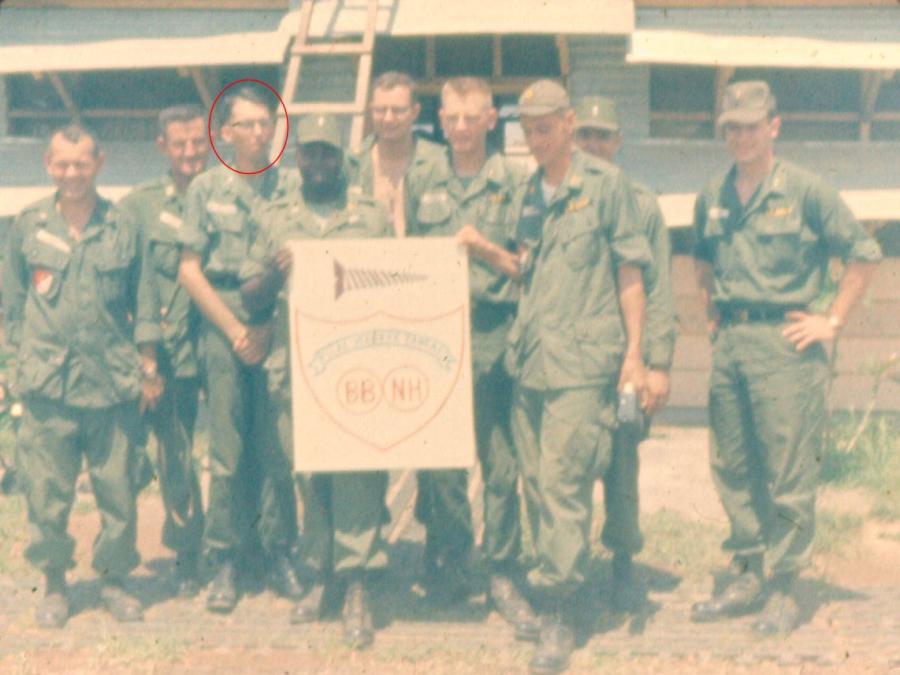
The history of Army-Baylor is shaped by leaders whose influence extends far beyond their own service, creating opportunities for future generations of healthcare professionals. Among those distinguished leaders is retired Col. Nickey McCasland, a double Baylor graduate whose career as an Army nurse, healthcare administrator and military leader reflects the enduring impact of the Army-Baylor Graduate Program in Health Care Administration.
McCasland's connection to Baylor began as an undergraduate nursing student, building on experiences he gained working in his hometown hospital as a teenager. After commissioning into the Army Nurse Corps (ANC) and serving in a variety of clinical assignments, he returned to Baylor through the Army-Baylor program, earning his Master of Hospital Administration in 1972. The combination of clinical nursing expertise and healthcare administration education would become a defining factor throughout his career.
Prior to attending Army-Baylor, Col. McCasland served during the Vietnam War, America’s first in which male as well as female ANC officers were deployed to a combat zone. In 1966, he participated in an innovative effort that temporarily reorganized the 3rd Surgical Hospital's nursing service into an all-male, highly mobile unit designed to move rapidly in support of combat operations. The team deployed from Bien Hoa to Ban Me Thuot in Vietnam's Central Highlands, providing care to military personnel while testing this new concept of battlefield medical support. The experience offered him an early glimpse into the complexity of military healthcare operations under austere conditions and reinforced the importance of adaptable leadership in Army Medicine.
Following his combat zone experience and upon graduation from Army-Baylor, Col. McCasland completed his residency at Tripler Army Medical Center in Hawaii. He was then assigned as a nursing methods analyst at Valley Forge General Hospital in Pennsylvania, where he applied the principles of healthcare administration to organizational and manpower management challenges. The specialized education he received through Army-Baylor made him a rarity among Army Nurse Corps officers at the time and helped position him for selection as a charter member of the newly established Health Services Command manpower survey team. Over the next several years, he gained a unique enterprise-wide perspective of Army medical centers and hospitals while helping evaluate healthcare staffing across the Army Medical Department.
Those early opportunities paved the way for a distinguished career that included becoming the first male Army nurse selected to attend the U.S. Army Command and General Staff College and serving in key personnel and professional development assignments at the Army Nurse Corps leadership level. Throughout his career, Col. McCasland credited mentors such as an earlier Army-Baylor graduate, then-Lt. Col. Madelyn Parks, later chief of the Army Nurse Corps, for encouraging him to pursue the Army-Baylor program and embrace the broader possibilities of leadership within military healthcare.
Col. McCasland's commitment to service did not end with retirement. Through the Colonel Nickey McCasland Endowed Scholarship Fund in Nursing, he continues to invest in the education and development of future Baylor nursing students. The scholarship reflects his belief in the transformative power of education and serves as a lasting expression of gratitude to the institution that helped launch both his nursing and healthcare administration careers.
Today, Col. McCasland's legacy stands as a testament to the value of lifelong learning, mentorship and service. More than five decades after earning his Army-Baylor degree, his impact can be seen not only in the organizations he helped lead, but also in the students and nurses who will benefit from his generosity for years to come. His career exemplifies the Army-Baylor mission of developing leaders who strengthen military medicine while creating opportunities for those who follow in their footsteps.