4 Must-Read Books for MBA Students in 2026

MBA programs are packed with required textbooks, case studies and articles.
That leaves little time for discretionary reading; even though independent reading is often where the most meaningful growth happens.
For students building leadership capacity and business acumen, a curated list of essential business books can make all the difference.
To help students shape their MBA reading list for 2026, four Baylor University professors share recommendations they believe belong on every list. Together, they represent some of the best books for MBA students seeking long-term impact beyond the classroom.
The War for Middle-Earth: J.R.R. Tolkien and C.S. Lewis Confront the Gathering Storm, 1933–1945 by Joseph Loconte.
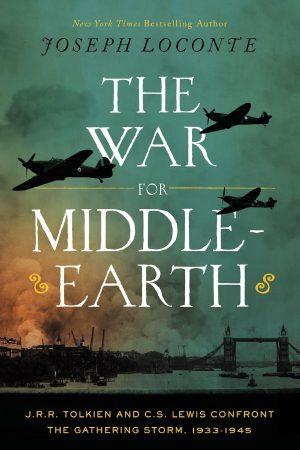
Dr. Matthew J. Quade is the associate dean for Values-Based Leadership and director of the Christian Center for Leadership and Ethics at Baylor’s Hankamer Business School. His recommendation, The War for Middle Earth: J.R.R. Tolkien and C.S. Lewis Confront the Gathering Storm, 1933–1945, was given to him by a friend and fellow leader.
Quade sees themes in the book resonating with today’s readers.
“The story of friendship and a shared commitment to values, integrity, and faith in an age of distraction and widespread and high-stakes turmoil is extremely relevant for our moment,” he said.
In addition to themes of friendship, there are applications to the modern political climate.
“First, there’s guidance for people to be resolved in connecting to and learning from others,” he said. “Second, there is a vision for how people can remain civil in their discourse, even in the midst of disagreement.
“I don’t think we talk enough about the importance of friendship for those in leadership positions,” Quade said. “This book provides a fantastic picture of how important it is for leaders to have support and encouragement from other leaders, and particularly those who share a similar vision for work and the world.”
The Last Human Job: The Work of Connecting in a Disconnected World by Allison Pugh
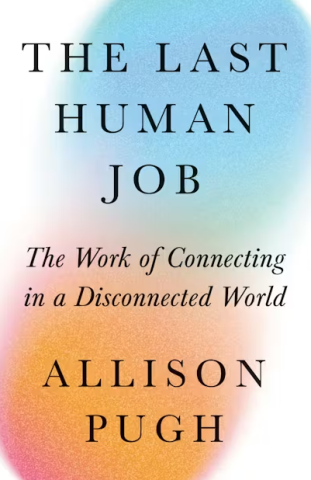
Questions about artificial intelligence (AI) are everywhere, with many workers wondering if their jobs are safe and whether their chosen career path will end abruptly at the door of Anthropic.
“Like most of us, I’m deeply interested in the impact of AI on business and society,” said Dr. Peter Klein, the W. W. Caruth Chair, professor of Entrepreneurship, and Chair of the Department of Entrepreneurship and Corporate Innovation. “My own view is that digital tools (including AI) are complements to, not substitutes for, human judgment.”
Klein sees the book’s themes of AI and the future of work, the actual work leaders and managers do and the problems of overreliance on metrics resonating with readers.
Applying Christian belief to the topic of AI and work is important, Klein said.
“Christianity has a unique concept of the human person, something that should inform our discussions of AI and how people (and algorithms) connect,” he said. “AI agents, despite their growing capabilities, are not made in the image of God. This is a distinction managers and business leaders should heed!”
How to Know a Person by David Brooks
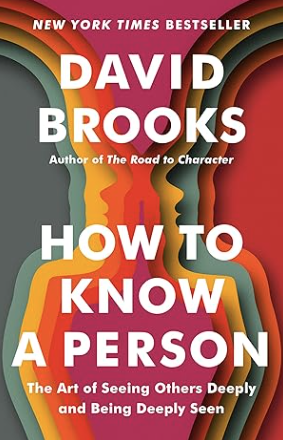
“As a teacher of negotiation and conflict resolution, as well as a Christian, I’m very interested in civil discourse and building tools that allow us to really get to know and honor the people with whom we interact and yes, even disagree,” said Dr. Sara Perry, professor of Management. “How to Know a Person offers a lot of hope for we humans, as we try to understand others (and ourselves) better.
“My favorite quote from the book is on page nine,” Perry said. “Brooks writes, ‘In this age of creeping dehumanization...I’ve come to believe that the quality of our lives and the health of our society depend to a large degree on the way we treat each other in the minute interactions of daily life. And all these different skills rest on one foundational skill: the ability to understand what another person is going through. There is one skill that lies at the heart of any healthy person, family, school, community organization or society: that ability to see someone else deeply and make them feel seen – to accurately know another person, to let them feel valued, heard and understood. That is at the heart of being a good person, the ultimate gift you can give to others and to yourself.’”
How to Know a Person isn’t mere theory. Practical steps are presented in three sections: “I see you,” “I see you in your struggles” and “I see you in your strengths.”
Brooks offers concrete terminology for the way humans tend to think, organize ourselves and our thoughts, including how we interact and judge others.
“He does not shy away from disagreements or even defending what is ‘right’ and ‘good,’ Perry said. “Instead, he focuses more on the ways we can really connect and understand our interaction partners, shifting the focus from the traditional view of ‘winning’ to a more holistic and meaningful experience that likely will also result in ‘winning’ of many kinds over a longer period of time.”
The Psychology of Money by Morgan Housel
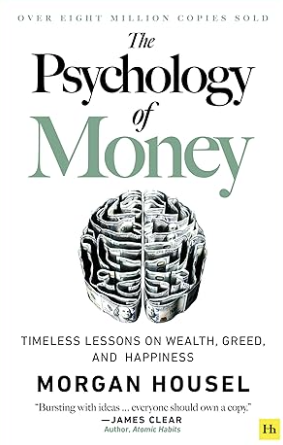
“I was drawn to The Psychology of Money due to its rejection of the common idea that financial success is primarily about intelligence or technical mastery,” said Dr. Erik Davidson, CFA, CTFA, clinical assistant professor of Finance at the Business School. “Instead, Housel centers the discussion on behavior; how habits, emotions, incentives and behavior shape financial outcomes far more than superior knowledge.”
One section that made a particularly strong impression on Davidson addresses luck and risk.
“The author shows how outcomes often reflect circumstances beyond individual control, urging humility in success and compassion in judging failure,” he said. “This reframing is powerful because it challenges the commonly held view that some investors have a special ability to be smarter than the markets.
“This book addresses what traditional finance education often neglects: character, temperament and wisdom in decision-making,” Davidson said. “It helps future leaders recognize that long-term success depends on aligning decisions with values, risk tolerance and a sustainable vision of success. That insight pays dividends far beyond finance.”
This MBA reading list for 2026 highlights more than academic success; it emphasizes leadership, ethics, entrepreneurship and human-centered strategy. Whether you’re searching for the best books for MBA students or building a lifelong professional library, these titles offer enduring insights beyond graduation.
Click here to read Baylor’s MBA Must-Read Books in 2025
Click here to read more about Baylor’s MBA program offerings.